Creează-ți propria ta colecție
Salvează obiecte în propriile tale colecții
Urmărește obiectele
Marchează obiectele cu propriul status
Abonează-te
Primește actualizări când sunt adăugate obiecte noi
Aruncă un ochi și pe alte colecții care s-ar putea să-ți placă.
Sortează după
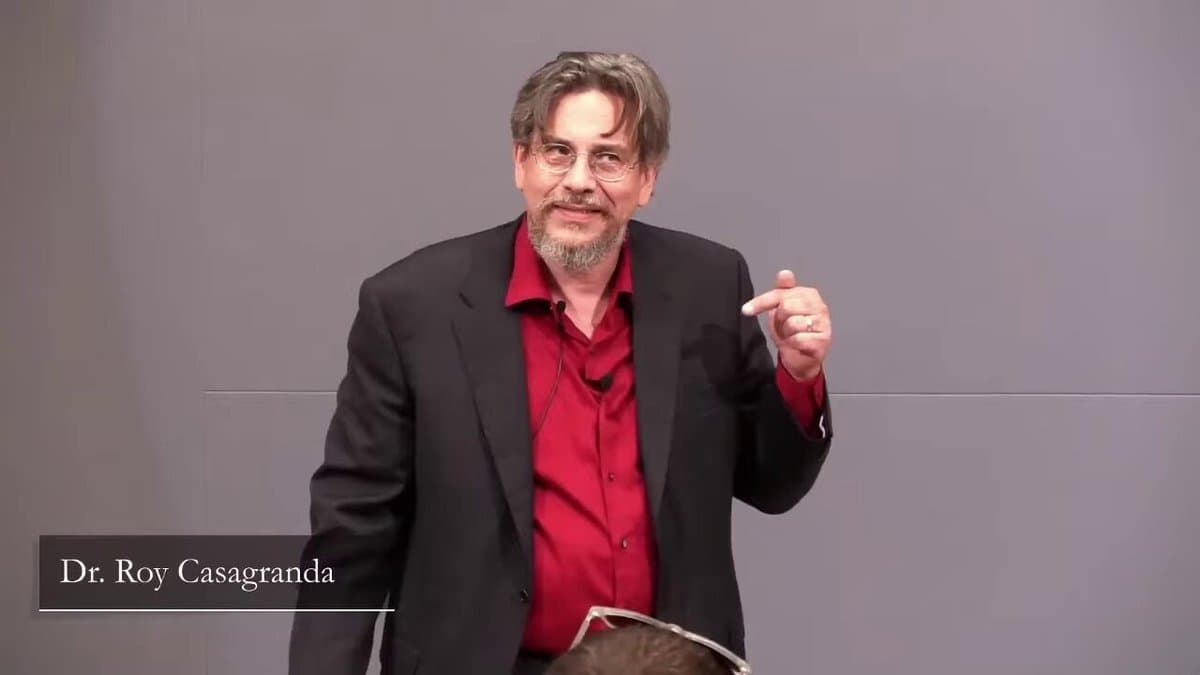
Season two of Lessons from the Past continues with Dr. Roy Casagranda examining the forces that shaped the modern Middle East through the rise of oil politics, anti-colonial movements, and Cold War intervention. Centered on the post-World War II era, this lecture explores how oil became the foundation of global power and why the Middle East emerged as one of the central geopolitical battlegrounds of the 20th century. Rather than focusing on a single conflict, Dr. Roy traces the interconnected forces that reshaped the region: the rise of Gamal Abdel Nasser and Pan-Arabism, the Suez Crisis, CIA-backed coups in Syria and Iran, the formation and collapse of the United Arab Republic, and the creation of the petrodollar system that transformed the global economy.
Season two of Lessons from the Past opens with Dr. Roy Casagranda examining the deep historical forces that shaped the modern Middle East. Centered on Napoleon’s 1798 invasion of Egypt, this lecture explores why that moment marked a critical shift in a much longer story spanning centuries. Rather than a focus on single event, Dr. Roy traces a continuous struggle over Egypt’s strategic importance, from the Roman Empire and early Arab conquests to the Crusades and the rise of the Ottoman Empire. He shows how control of food production, trade routes, and geography made the region central to global power.
This lecture explores the rise of the Persian Empire through the life of Cyrus the Great (Kūruš, کوروش), examining how early migrations, horse-based warfare, and regional power struggles shaped the ancient world. Dr. Roy traces Cyrus’s campaigns across Anatolia, Central Asia, India, and Mesopotamia, including the fall of Babylon, and explains why his approach to conquest marked a decisive break from ancient norms. Central to the discussion is the Cyrus Cylinder, often described as the earliest statement of human rights, which articulated principles of religious freedom, limits on state power, and cultural pluralism that continue to influence political thought and leadership today.
n this third and final episode of the Office Hours series on Palestine, Dr. Roy Casagranda and Jeremy conclude their historical examination of the Israel–Palestine conflict by focusing on recurring patterns of violence and why lasting peace has remained so elusive. Drawing from centuries of history — including the Crusades, World War II, and the events of October 2023 — the conversation explores the roles of trauma, power, global influence, and media in sustaining the conflict. Rather than reducing the issue to good versus evil, this discussion challenges viewers to think critically about leadership, systems, and what genuine reconciliation would require.
Dr. Roy Casagranda explores the founding and early development of Venice, tracing its transformation from a Roman refuge into one of the most durable republics in world history. Beginning with the collapse of the Western Roman Empire, this lecture follows waves of invasion, migration, and political upheaval that pushed communities into the Venetian lagoon. Dr. Casagranda examines how geography, trade, slavery, religion, and relentless external threats shaped Venice’s unique political system, from the rise of the first Doges to the city’s gradual emergence as an independent republic. By exploring themes of power, survival, commerce, and identity, this lecture reveals how Venice endured where empires failed — and what its story teaches us about governance, morality, and resilience in times of collapse.
Dr. Roy Casagranda examines the extraordinary life and leadership of Toussaint Louverture during the Haitian Revolution — a story of vision, mercy, and betrayal. From the arrival of Columbus and the genocide of the Taino to the rise of Louverture and the fall of Napoleon’s colonial ambitions, this lecture reveals how Haiti became the first free Black republic in the modern world. Exploring themes of power, forgiveness, race, and empire, Dr. Casagranda exposes the moral and political lessons that still define the struggle for justice and freedom today.
The Islamic Golden Age is Dr. Roy's seventh lecture for the Museum of the Future's Lessons from the Past (2025). This collaboration between the Museum of the Future and Dr. Roy aims to explore 10 topics ranging from the life of the father of modern medicine to examples of great leadership to the birth of the Most Serene Republic of Venice. Why did the Islamic Golden Age happen — and why did knowledge not only survive but thrive? In this lecture, Dr. Roy Casagranda shows how ideas passed from Egypt, Mesopotamia, Greece, Rome, and Persia into the Arab empires, where they were protected, studied, and expanded. Unlike civilizations that allowed libraries to burn and wisdom to fade, the Abbasid world cultivated learning as a foundation of power and progress. Through compelling stories, Dr. Roy explains how scholars like Ibn al-Haytham and Ibn Sina advanced science and medicine, while the preservation of Plato and Aristotle ensured that ancient wisdom lived on to inspire the European Renaissance. This is a history of how cultures that valued knowledge carried it forward — and how that appreciation shaped the course of civilization.
In this episode of Office Hours, Dr. Roy Casagranda and Jeremy continue their deep dive into Palestine. After opening with updates on their new podcast and addressing a common audience question about a World War II lecture series, they turn to the history of Palestine — beginning with the Nakba of 1948, the creation of the Palestinian Liberation Organization (PLO), and the rise of factions such as Fatah and Hamas. Dr. Roy traces major turning points including the Suez Crisis of 1956, the Six-Day War of 1967, and Israel’s occupation of Palestinian territories. He explains how these policies have created conditions of apartheid, systemic inequality, and ongoing conflict in Gaza, the West Bank, and beyond. The lecture also explores the role of international powers, the formation of Hamas, the emergence of Hezbollah, and the broader dynamics shaping the Middle East today.
In this episode of Office Hours with Dr. Roy Casagranda, Roy and Jeremy take on one of the most difficult and important conversations of our time: the history of Palestine. Part 1 traces the story from ancient times through the creation of the state of Israel in 1948. Roy walks us through the roots of Jewish and Palestinian identity, the role of empires from Babylon to Rome, the Crusades, and the Arab conquest. We explore the rise of Zionism in Europe, centuries of antisemitism and pogroms, the Holocaust, and the global decisions that led to partition and displacement in Palestine. This is not just a history lesson — it’s a framework for understanding how the past still shapes the present. This is Part 1 of a multi-part series. Future episodes will examine the apartheid system, ongoing settlements, the genocide in Gaza, the daily realities faced by Palestinians today, and what can be done.
Dr. Roy Casagranda challenges the foundations of how we define “Western Civilization.” He traces the origins of government, writing, and religion in ancient Egypt and Mesopotamia, arguing that civilization predates writing and even agriculture. Roy also dismantles the artificial East–West divide, spotlighting Persia and the Islamic Golden Age as essential parts of Western history often erased from traditional narratives. With humor, insight, and rigor, he calls for a re-examination of the West’s origin story—and what it really means to be “Western.”




_c2g7fs.jpg&w=1280&q=75)


